
THE SHORT ANSWER
Partner content becomes useful when collaborators contribute different expertise to the same reader question. Two logos on a generic article do not create that value. SaaS and IT businesses should agree on the subject, roles, evidence and publication process before drafting. The result should make sense independently of the joint promotion and accurately describe the boundaries of the relationship, including which statements each participant can substantiate and maintain.
To see how this step fits into your content strategy, read the pillar guide B2B content marketing: From useful expertise to qualified demand.
Agree on a shared reader question
Begin with a concrete task that both partners can explain from different perspectives. A software provider may understand product prerequisites while an implementation partner contributes knowledge of adoption decisions. Frame the main question together and check that both contributions are necessary. If one participant supplies distribution alone, a straightforward promotional partnership may be more accurate than claiming joint subject-matter authorship. Also define who the resource is not intended for. That boundary prevents a generic overview that pleases both organizations but helps no reader make a concrete decision or understand a real implementation trade-off.
Allocate contributions and responsibility
Record who conducts interviews, checks evidence, drafts the content and owns the agreed final edition. Attribute substantive contributions clearly, especially where perspectives differ. An editor can make the writing consistent without concealing meaningful disagreements. Agree on how disputed points are resolved and how long reviews can realistically take. One partner should not approve commitments on behalf of the other. Statements about delivery scope, integrations or shared processes need confirmation from responsible people on both sides. Resolve these responsibilities before the draft circulates so routine review does not turn into an undefined negotiation over the whole partnership. Explore this further in the guide Editorial approvals with clear responsibilities and bounded review.
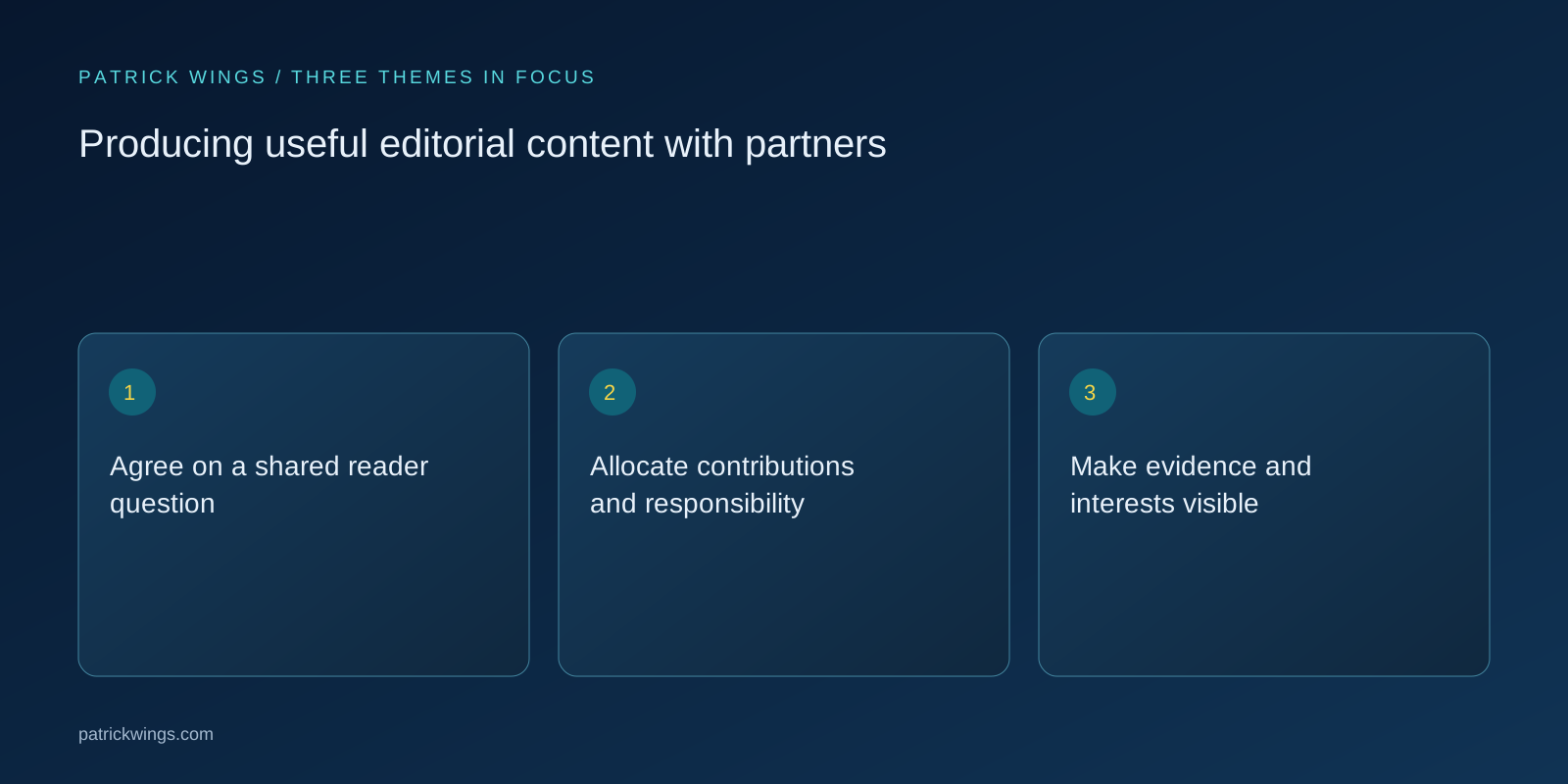
Make evidence and interests visible
Distinguish experience, documented product information and general recommendations. A joint article is not an independent assessment of its participating vendors. It can still be useful when readers understand that context and can inspect the reasoning. Use approved evidence and clarify rights for quotations, images and work samples. Remove confidential customer details before sharing material between organizations. If a claim is unsupported, narrow it or omit it. More logos do not supply evidence or explain applicability. The goal is to make the contribution credible within its real boundaries rather than borrowing authority from the appearance of collaboration.
A hypothetical shared resource
Imagine a SaaS vendor and consulting partner creating a knowledge-platform adoption guide. The vendor explains technical prerequisites using publicly documented functionality. The consultant discusses ownership, maintenance and internal rollout decisions. Both review an explicitly hypothetical example that reveals no customer information. The guide separates product capabilities from organizational recommendations and identifies questions that require individual assessment. This format illustrates complementary expertise. It does not promise a fixed implementation duration, establish a binding joint service or claim measured improvements for real customers. Its value comes from making the different contributions and their limits understandable to the reader. Explore this further in the guide SaaS partnerships: test the shared customer situation first.

Agree on approval and maintenance
A shared draft needs a clear final edition and recorded approval. Separate factual corrections from stylistic preferences, prioritizing changes that affect meaning or applicability. Decide whether each organization publishes its own edition or links a central resource. Name contacts and a review route for later updates. If a product feature disappears or the partnership changes, an old claim should not continue unnoticed. Agree how publication can be paused, material replaced or an edition marked historical. Maintenance belongs to the collaboration because the resource may continue circulating long after the initial joint campaign and its original project team have ended.
Coordinate distribution without changing promises
Each partner can develop a relevant introduction for its audience while preserving the same substantive meaning. Check previews, translations and shortened social posts for altered implications. A qualified technical statement should not become a sweeping success promise in promotion. Explain who handles inquiries and what information-sharing process is actually intended. Publishing together does not mean that both teams provide every service described. A coordinated response route prevents conflicting expectations when readers ask detailed questions. Include corrections to accompanying posts when the main resource changes, rather than updating only the central document and leaving inaccurate promotional wording active.
Evaluate the questions it resolves
Assess whether the resource answers the agreed reader question and whether its different perspectives contribute useful depth. Follow-up questions may reveal unclear responsibilities or confusion between product and consulting services. A reading task with relevant participants can show these issues more clearly than counting published posts. Do not simply add both partners’ audience figures; overlap and differing measurement methods can distort the result. Record lessons for the next collaboration. The central editorial standard remains an understandable answer that both parties can stand behind, with evidence, boundaries and ownership visible enough for readers to judge its relevance.
INTERACTIVE / FROM READING TO ACTION
Three checkpoints for your implementation
Choose a checkpoint and track your reading progress. Checks are neither saved nor sent and do not score your business.
CHECKPOINT 01
Make evidence and interests visible
Distinguish experience, documented product information and general recommendations.
Explore in the article ↗CHECKPOINT 02
A hypothetical shared resource
Imagine a SaaS vendor and consulting partner creating a knowledge-platform adoption guide.
Explore in the article ↗CHECKPOINT 03
Agree on approval and maintenance
A shared draft needs a clear final edition and recorded approval.
Explore in the article ↗Frequently asked questions
When is partner content useful?
When complementary expertise helps answer a concrete reader question more effectively.
Who approves the content?
Each partner owns its statements, while the joint final edition needs an agreed substantive approval process.
Does it need one central resource?
That depends on the publication model. A clear final edition, appropriate links and a shared update process matter most.
How can I put “Agree on a shared reader question” into practice?
Begin with a concrete task that both partners can explain from different perspectives. A software provider may understand product prerequisites while an implementation partner contributes knowledge of adoption decisions. Frame the main question together and check that both contributions are necessary.
What matters when working on “Allocate contributions and responsibility”?
Record who conducts interviews, checks evidence, drafts the content and owns the agreed final edition. Attribute substantive contributions clearly, especially where perspectives differ. An editor can make the writing consistent without concealing meaningful disagreements.