
THE SHORT ANSWER
A case-study library helps buyers find experience relevant to their own decision. Organize cases around recognizable problems, conditions and approaches. Industries and logos can add context, but cannot replace it. Each preview should explain why a case matters and where its applicability ends before readers open the full account and assess its evidence.
To see how this step fits into your content strategy, read the pillar guide B2B content marketing: From useful expertise to qualified demand.
Inventory the available cases
Record each existing case with its problem, implementation context, project scope, evidence and publication permissions. Note whether a full report is publicly available. Separate publishable claims from internal knowledge. A recognizable customer name does not make an incomplete account useful. Mark missing information before designing cards and filters. This reveals which stories can support comparison and where further research or approval is needed, rather than creating a visually complete library whose individual entries differ so substantially that readers cannot evaluate them on a consistent basis. Explore this further in the guide Writing B2B case studies: Show evidence, decisions and limitations.
Group around buyer questions
Collect questions from sales conversations, such as replacing a legacy system, working with a small team or introducing changes during live operation. Select a few categories readers can distinguish. Industry can matter, but a problem category may communicate relevance more directly. Test labels with people outside the company. If they interpret the same category differently, add an explanation or rename it. Avoid internal campaign language familiar only to your editors, because visitors need labels that help them decide which experience could illuminate the issue they currently face.
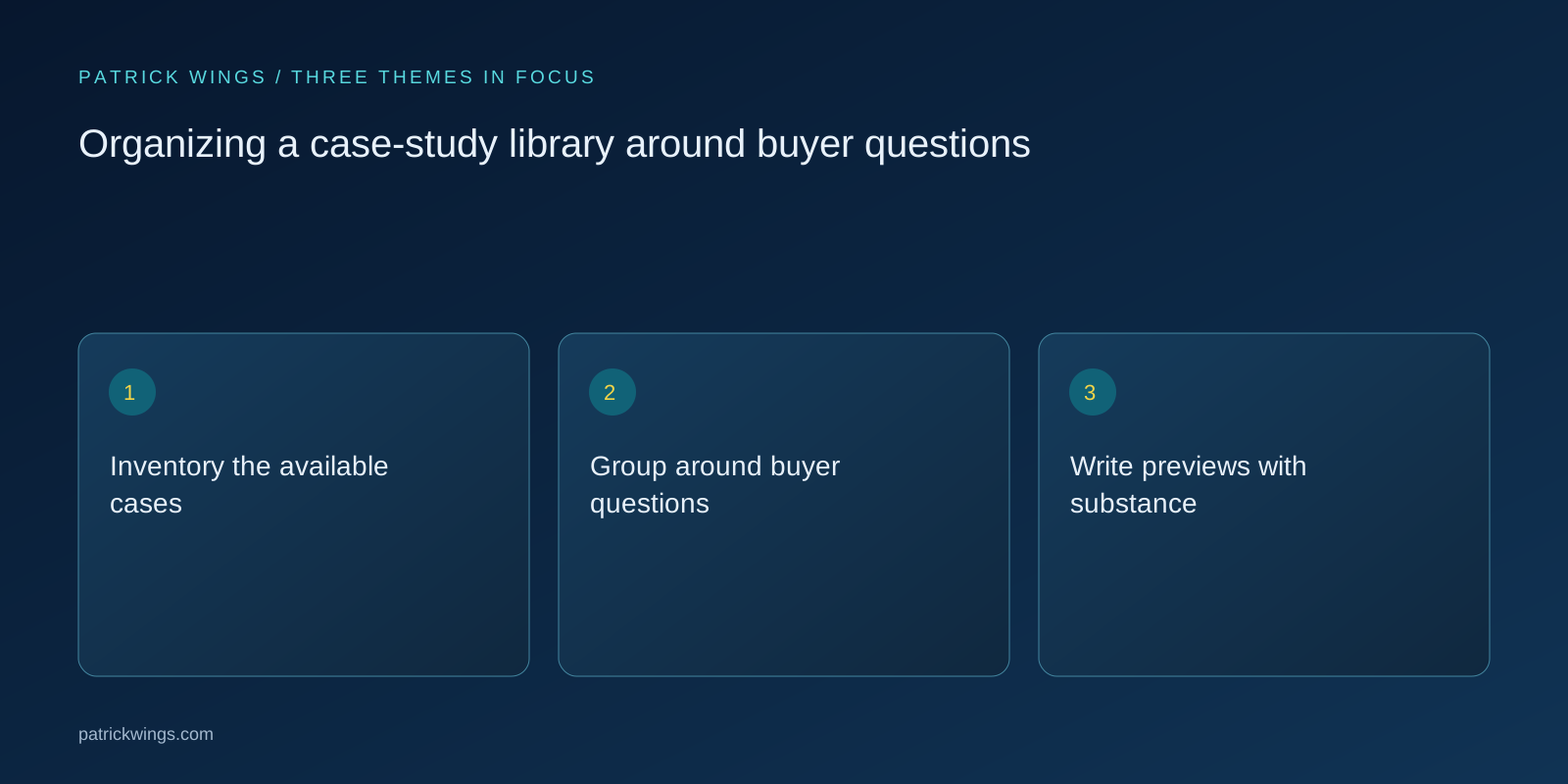
Write previews with substance
Each card should name the starting question, a relevant condition and the focus of the work. Include a concise result only when it is supported and understandable in context. Avoid isolated percentages without a stated baseline. Identify anonymized cases where appropriate. Descriptive links should reveal their destination instead of repeating “More” throughout the page. If opening a resource requires registration, disclose this before the click. Visitors should be able to tell whether they are opening a detailed account, watching a video or reading a brief summary.
Preserve comparability and limits
Create shared metadata without forcing every story into an identical narrative. Fields such as project stage, baseline and evidence type help readers compare relevance. Results from different projects are not automatically comparable. Explain differences in measurement and conditions within each case. Update descriptions when products or services change. An older story may remain useful if it clearly identifies the historical situation it describes and the aspects of today's offer that it cannot substantiate. Preserve those distinctions rather than silently rewriting past projects to resemble your current delivery model. Explore this further in the guide Placing credible evidence on B2B service pages.

Follow a hypothetical search
Imagine an IT director seeking examples of implementation with limited internal capacity. The library offers a category called “Implementation and collaboration.” An anonymized preview explains that an external partner facilitated workshops while the internal team retained responsibility for data approvals. The full account explains those roles further. It does not claim the same arrangement works everywhere. In this hypothetical example, the reader locates a comparable working condition and can then assess whether differences in staffing, responsibility and scope make the experience useful for her own planned project.
Review the library in operation
Test concrete retrieval tasks: can someone find a case addressing a named challenge and explain its relevance? Observe empty filter combinations and categories that are hard to distinguish. For a small collection, a straightforward overview may work better than a complicated filtering system. Name an owner for permissions, broken links and outdated project details. Apply consistent intake criteria to new cases. Periodically identify important buyer questions that still lack relevant experience; these gaps should prompt further investigation, not embellishment of existing stories to make them appear more broadly applicable.
INTERACTIVE / FROM READING TO ACTION
Three checkpoints for your implementation
Choose a checkpoint and track your reading progress. Checks are neither saved nor sent and do not score your business.
CHECKPOINT 01
Write previews with substance
Each card should name the starting question, a relevant condition and the focus of the work.
Explore in the article ↗CHECKPOINT 02
Preserve comparability and limits
Create shared metadata without forcing every story into an identical narrative.
Explore in the article ↗CHECKPOINT 03
Follow a hypothetical search
Imagine an IT director seeking examples of implementation with limited internal capacity.
Explore in the article ↗Frequently asked questions
Are industry filters always necessary?
No. Check whether industry determines relevance or whether problems and project conditions are more useful.
Can anonymized cases be included?
Yes, when anonymization is explicit and the claims remain supportable.
When should a case be removed?
When permission is missing, information has become misleading or a defensible update is impossible.
How can I put “Inventory the available cases” into practice?
Record each existing case with its problem, implementation context, project scope, evidence and publication permissions. Note whether a full report is publicly available. Separate publishable claims from internal knowledge.
What matters when working on “Group around buyer questions”?
Collect questions from sales conversations, such as replacing a legacy system, working with a small team or introducing changes during live operation. Select a few categories readers can distinguish. Industry can matter, but a problem category may communicate relevance more directly.