
THE SHORT ANSWER
Original B2B research becomes useful when readers can understand both its findings and its limits. Plan an accessible methods explanation as well as the headline. Who was studied, how were data collected and which conclusions are justified? Answer these questions before publication rather than waiting for critical enquiries after the report has attracted attention.
For the broader picture of technical foundations, useful content and visibility measurement, read the pillar guide SEO, GEO and AEO for SaaS: visibility that supports buying decisions.
Bound an answerable research question
Define a specific question with a population, subject and period. Asking about adoption obstacles in a particular software category is more tractable than asking about the entire future of digital transformation. Decide whether you are investigating attitudes, observed behaviour or technical characteristics. Do not let these become interchangeable in the published account. Specify the decision the work should inform. An editorially interesting question does not always require a representative survey, but its method must fit its claim. Record assumptions and exclusions before collection so that the final story does not simply follow whichever data points appear most striking.
Disclose sampling and access
Explain how participants or units of analysis were selected. A survey of newsletter readers initially describes that reached group; it does not automatically represent every company in the industry. Record invitation routes, eligibility and material nonresponse. Describe each source separately when combining datasets. AAPOR’s disclosure guidance includes population, recruitment, collection dates and sample size among relevant methodological details. Use those questions as a transparency reference without implying membership or certification. Where selection systematically excludes particular types of company, that limitation belongs in the interpretation of the findings rather than merely in an inconspicuous footnote. Explore this further in the guide Making expert authorship visible on technology websites.
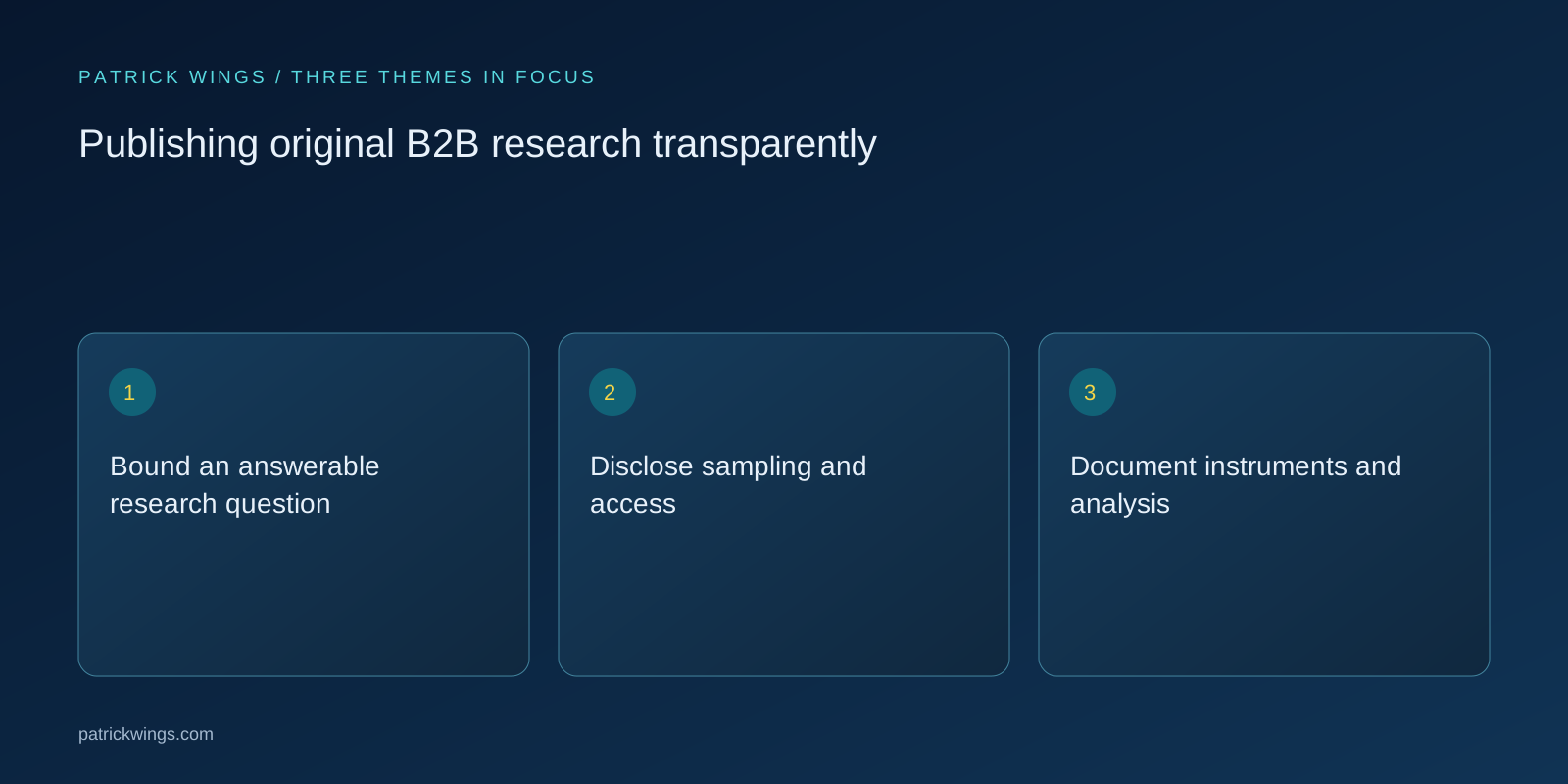
Document instruments and analysis
Provide relevant question wording, answer options and analytical decisions. A response to a leading question should not be described as a spontaneously expressed priority. State the actual denominator for percentages and explain multiple selection. Describe missing responses, exclusions and weighting where applicable. Preserve traceable working versions without publicly exposing identifiable raw records. Another person should be able to check important tables and calculations using approved supporting material. For qualitative interviews, explain how themes were developed and choose quotations carefully so that an unusually vivid individual comment is not mistaken for evidence of prevalence across the target population.
Separate findings from interpretation
Start with the observed result and then explain your interpretation. Differences between groups may reflect selection, roles or other characteristics. Association does not establish causation. Avoid a market forecast when the study measured only present self-reported attitudes. Graphics need readable axes, units and an explanation of the population studied. A clear main message should not erase uncertainty. Check the headline, social graphic and executive summary against the same evidence. A cautious methods appendix cannot repair an overstated promotional headline after the fact, particularly when the isolated headline is what most readers will actually encounter.

Example: a bounded customer survey
A hypothetical SaaS team asks existing administrators about setup obstacles. The analysis informs onboarding improvements. Its publication identifies selection, collection dates and the actual question, describing findings as feedback from that customer group. It does not claim to represent every IT department. Selected comments illustrate themes and are used with appropriate permission. The accompanying article explains which product decisions the feedback informs and which questions remain unresolved. This illustration deliberately contains no invented result figures: an attractive number without an actual study would be a marketing invention rather than evidence of original research. Explore this further in the guide Building research dossiers for credible B2B content.
Create a durable reference
Publish core findings and methodology at a stable destination, supported by accessible tables or a download where useful. Identify the sponsor, researchers and potential conflicts of interest. Make corrections visible rather than silently changing published results. A later collection wave needs clear version information so that comparisons remain inspectable. Do not expect search engines or AI systems to cite research merely because it is original. Its primary value is a dependable basis for readers. If others reference the findings, the source page should contain enough context to recognise abbreviated or inaccurate accounts without needing private explanatory correspondence.
INTERACTIVE / FROM READING TO ACTION
Three checkpoints for your implementation
Choose a checkpoint and track your reading progress. Checks are neither saved nor sent and do not score your business.
CHECKPOINT 01
Document instruments and analysis
Provide relevant question wording, answer options and analytical decisions.
Explore in the article ↗CHECKPOINT 02
Separate findings from interpretation
Start with the observed result and then explain your interpretation.
Explore in the article ↗CHECKPOINT 03
Example: a bounded customer survey
A hypothetical SaaS team asks existing administrators about setup obstacles.
Explore in the article ↗Frequently asked questions
Is a customer survey representative?
Not automatically. Describe the actual group reached and the sampling method.
Must raw data be public?
Not universally. Protect confidential records while providing inspectable methods and suitable aggregated results.
Can a small study be published?
Yes, provided its claims and conclusions fit the method and sample.
How can I put “Bound an answerable research question” into practice?
Define a specific question with a population, subject and period. Asking about adoption obstacles in a particular software category is more tractable than asking about the entire future of digital transformation. Decide whether you are investigating attitudes, observed behaviour or technical characteristics.
What matters when working on “Disclose sampling and access”?
Explain how participants or units of analysis were selected. A survey of newsletter readers initially describes that reached group; it does not automatically represent every company in the industry. Record invitation routes, eligibility and material nonresponse.