
THE SHORT ANSWER
Prompt engineering means describing a task so an AI system can provide the required assistance more dependably. It is not a search for secret wording. For marketing teams, context, explicit quality standards and testable examples usually matter more than prompt length. A useful workshop teaches those skills through actual work and turns the learning into repeatable routines.
To connect individual AI applications with reliable marketing operations, read the pillar guide AI transformation in B2B marketing: from individual prompts to reliable operations.
Start with a clear work product
“Write a good LinkedIn post” leaves many decisions unresolved. Specify audience, occasion, available evidence, intended message and format. Identify missing information that must not be invented. AI can work only with the context provided or accessible to it. A prompt should not attempt to replace missing positioning with strong adjectives. Check the brief itself: could a new colleague produce an acceptable result from it? If not, the problem probably precedes the wording of the prompt. Improving the input is part of the work rather than an optional preliminary step.
Use examples as a shared quality reference
An appropriate example can demonstrate tone, structure and information density. Explain which characteristics should carry over. Otherwise the system may copy incidental details or claims that are no longer valid. Also show an unsuitable example and explain the difference. Short, approved materials from everyday work make good workshop inputs. Examples provide orientation, not permission to reuse third-party content without checking it. The new output still needs to be factually accurate and independently related to the current task, rather than reproducing the appearance of a previous successful piece.
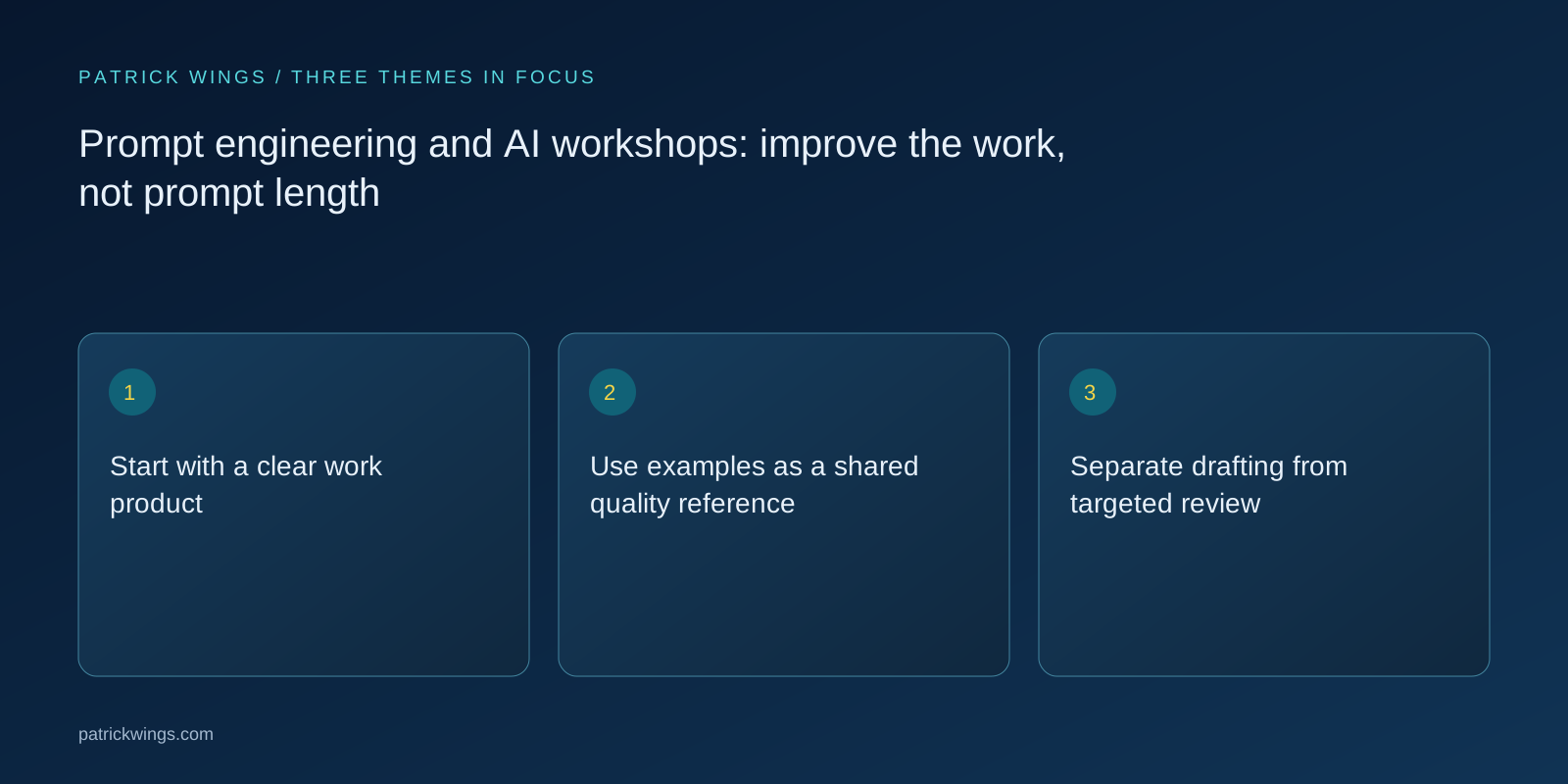
Separate drafting from targeted review
Do not only generate a draft; assess it against explicit criteria. Are product details correct, is the audience clear and are claims supported? An additional AI review can offer useful signals but does not guarantee correctness. Subject uncertainty needs suitable evidence or an accountable person. Request a revision addressing named defects. Avoid endless generic instructions such as “make it better”. Specific feedback about the error that must change makes improvement understandable and gives the team a process it can repeat beyond a single successful example. Explore this further in the guide AI readiness in marketing: is your team ready for a first pilot?.
Test templates across different assignments
A prompt that works for one perfectly prepared example is not yet a dependable team template. Test missing information, different audiences, conflicting sources and both required languages. Specify when the system should ask a question or stop. Change components deliberately so that you can assess their effect. Record the environment used without turning a result into a permanent promise across every model. If better data or a fixed validation rule addresses a requirement more reliably, do not try to enforce it solely by adding increasingly elaborate prompt instructions.

Make workshops a shared problem-solving exercise
Ask participants to prepare a real task and attempt it before receiving a perfect template. Compare results against the same criteria and analyse errors. Then improve the brief, context and review steps deliberately. Leave time to discuss why an answer can look persuasive and still be wrong. Teach permitted data use and ownership through concrete situations. A workshop should do more than demonstrate capability. It should help employees choose suitable tasks, recognise limitations and use the results responsibly when the facilitator is no longer present. Explore this further in the guide Choosing marketing AI tools: compare against the task you actually need.
Embed the learning after the session
Turn useful examples into a small, maintained template collection containing purpose, required inputs, review criteria and an owner. Plan a later review using outputs produced in actual work. Which templates were used, where did correction become necessary and which tasks proved unsuitable? Do not measure only enthusiasm on the workshop day. Value appears in clearer briefs, better checking and usable deliverables. A simple template the team understands and maintains is more useful than an extensive prompt library with no identifiable owner or reliable process for updates.
INTERACTIVE / FROM READING TO ACTION
Three checkpoints for your implementation
Choose a checkpoint and track your reading progress. Checks are neither saved nor sent and do not score your business.
CHECKPOINT 01
Separate drafting from targeted review
Do not only generate a draft; assess it against explicit criteria.
Explore in the article ↗CHECKPOINT 02
Test templates across different assignments
A prompt that works for one perfectly prepared example is not yet a dependable team template.
Explore in the article ↗CHECKPOINT 03
Make workshops a shared problem-solving exercise
Ask participants to prepare a real task and attempt it before receiving a perfect template.
Explore in the article ↗Frequently asked questions
Are longer prompts automatically better?
No. Relevant context and clear requirements matter more than length. Unnecessary or contradictory instructions can make a task harder.
Does our team need technical expertise?
Not necessarily for basic briefing and quality review. Technical integration and permissions require the appropriate expertise.
What should a workshop leave behind?
Tested templates for specific tasks, review criteria, clarity about permitted data and a plan for application and later review.
How can I put “Start with a clear work product” into practice?
“Write a good LinkedIn post” leaves many decisions unresolved. Specify audience, occasion, available evidence, intended message and format. Identify missing information that must not be invented.
What matters when working on “Use examples as a shared quality reference”?
An appropriate example can demonstrate tone, structure and information density. Explain which characteristics should carry over. Otherwise the system may copy incidental details or claims that are no longer valid.