
THE SHORT ANSWER
Organic distribution starts by asking where a resource can support a real reader task. A new article does not automatically need promotion through every available channel. SaaS and IT businesses benefit from a repeatable process: choose relevant audiences, create useful standalone adaptations, coordinate publishing and examine feedback. Reach can be one signal, but it is neither guaranteed nor a substitute for relevance. Distribution works best as an editorial responsibility with defined follow-through.
To see how this step fits into your content strategy, read the pillar guide B2B content marketing: From useful expertise to qualified demand.
Establish the editorial reason to share
Record the question answered by the resource and the people for whom it is currently relevant. That provides a reason to publish. A technical worksheet may help a specialist community, while a decision guide may fit existing customer communication. Check whether the channel permits outside contributions and links. A relevant subject does not justify unwanted promotion in a community. Respect existing relationships and make your role clear. Begin with usefulness and permission rather than the largest possible list of destinations. This also makes it easier to explain why a particular resource belongs in one setting but not another. Explore this further in the guide Choose B2B channels by their role in the buying process.
Create an independently useful adaptation
Each adaptation should communicate a small, complete point. A post might explain a decision question, illustrate a short example or qualify a common misconception. The link then provides depth. Avoid teasers that create curiosity while withholding all substance. Check that shortening the text does not remove important conditions. A hypothetical example remains hypothetical in a brief social post. Preserve the meaning of the original while adapting the opening, format and density to the reading situation. The adaptation should help someone even if they do not immediately leave the channel to read the full article.
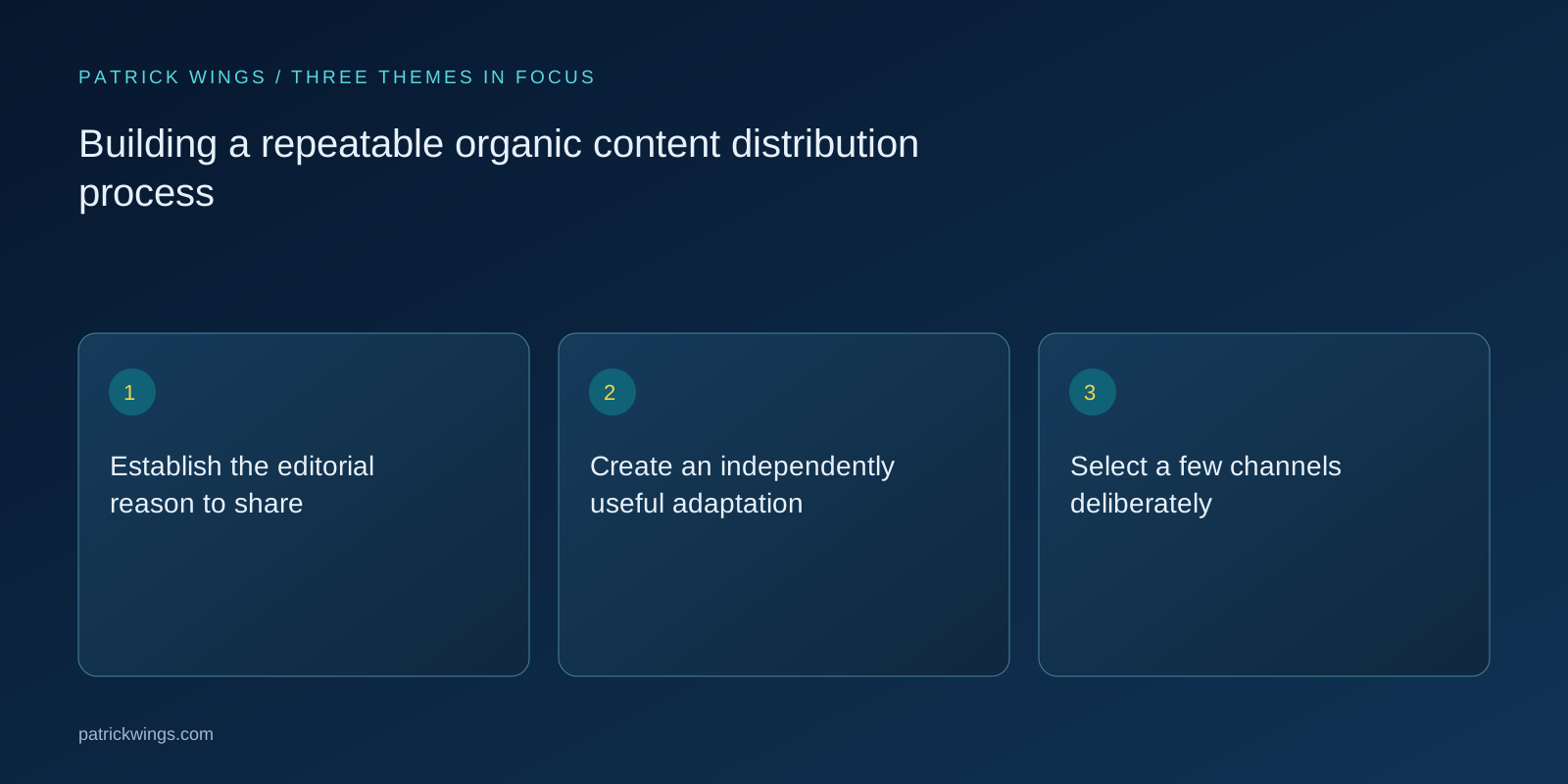
Select a few channels deliberately
Assess channels by audience relevance, permitted formats, available support and realistic follow-up. An owned newsletter, a specialist LinkedIn profile and a partner contribution can serve different purposes. Decide which are appropriate for this particular resource. Record why a channel is omitted as well as selected. Distribution then becomes an inspectable choice rather than a checklist applied to everything. Include replies and moderation in the effort estimate. A post in an active specialist community can require more follow-up than production time, so publish only when someone can support the ensuing discussion responsibly.
A hypothetical distribution plan
A fictional vendor releases a guide to selecting a data-integration solution. The team develops a LinkedIn post about a common requirements question, a newsletter paragraph with a small decision framework and an internal use card for sales. A technical partner receives an invitation to a joint discussion, without an obligation to publish. Each format handles a different subquestion and links to the longer guide. This example illustrates a possible working process. It makes no claim about a specific audience size, algorithmic advantage or guaranteed volume of organic inquiries, and it does not represent a real customer result.

Assign ownership and publication windows
Every selected adaptation needs an owner, substantive review and a planned publication window. Dates should fit the reason for sharing rather than merely fill empty calendar slots. Specify who responds to questions and initiates corrections after publication. For several contributors, maintain a shared status with a link to the approved edition. That reduces accidental distribution of outdated drafts. Also reserve time for later reuse when the subject becomes relevant again. Reposting the same wording is not automatically the best approach; a fresh question may call for a different extract or an updated explanation of the same resource.
Check the route back to the resource
Open each published link on mobile and verify agreement between language, preview and destination. A post describing an openly readable checklist should not unexpectedly send people to an unrelated form. Where shortened links or redirects are used, keep the destination understandable. Later edits to the original can also make old adaptations inaccurate. Maintain a record of important uses so substantial corrections can reach relevant posts and partners. This maintenance is part of distribution, not a separate optional task. A resource remains useful only when the paths that introduce it continue to describe it honestly. Explore this further in the guide Content repurposing: Turn expertise into a connected B2B topic.
Collect learning rather than promise reach
Compare signals only when their meaning is understood. Impressions, link visits, qualified questions and actual resource use describe different outcomes. Add the questions generated by each adaptation to the measurement record. A discussion may reveal a missing explanation in the main guide or a distinct topic for the next resource. Note which channel choices were useful and what support they required. A small relevant exchange can teach more than many ambiguous views. Organic distribution creates opportunities for use; it does not guarantee visibility or a particular commercial result, and reporting should preserve that distinction.
INTERACTIVE / FROM READING TO ACTION
Three checkpoints for your implementation
Choose a checkpoint and track your reading progress. Checks are neither saved nor sent and do not score your business.
CHECKPOINT 01
Select a few channels deliberately
Assess channels by audience relevance, permitted formats, available support and realistic follow-up.
Explore in the article ↗CHECKPOINT 02
A hypothetical distribution plan
A fictional vendor releases a guide to selecting a data-integration solution.
Explore in the article ↗CHECKPOINT 03
Assign ownership and publication windows
Every selected adaptation needs an owner, substantive review and a planned publication window.
Explore in the article ↗Frequently asked questions
Should every blog appear in every channel?
No. Choose channels by the reader question, audience relevance and available follow-up.
Can the same text be reused?
Yes, but check the format, meaning and relevance in each setting. An appropriate adaptation is often more useful.
Which distribution metric matters?
It depends on the purpose. Distinguish visibility, visits, content use and substantive questions.
How can I put “Establish the editorial reason to share” into practice?
Record the question answered by the resource and the people for whom it is currently relevant. That provides a reason to publish. A technical worksheet may help a specialist community, while a decision guide may fit existing customer communication.
What matters when working on “Create an independently useful adaptation”?
Each adaptation should communicate a small, complete point. A post might explain a decision question, illustrate a short example or qualify a common misconception. The link then provides depth.