
THE SHORT ANSWER
Answer B2B enquiries reliably and in line with expressed intent.
For the broader picture of how target customers, channels and sales handoffs work together, read the pillar guide B2B demand generation: from attention to qualified pipeline.
Define the help you promised
Answer B2B enquiries reliably and in line with expressed intent. Speed matters, but an automated acknowledgement is not yet a substantive answer. Define the useful response for a demo request, a technical question and a content download rather than treating every submission as the same task.
First review the form wording and requested contact method. A technical information request needs a different answer from an explicit demo enquiry. When the landing page promises a specific response, the first person handling it needs that context. A general greeting without reference to the question does not yet fulfil the promise.
Specify response types and working hours
Separate arrival, automatic acknowledgement, first human handling and genuinely useful response. Record business hours and cover arrangements. Without these definitions, response times cannot fairly compare teams and may encourage colleagues to send empty messages quickly instead of resolving the buyer’s actual question.
A response record needs arrival time, owner, requested help and time of the first appropriate reaction. Mark automatic acknowledgements separately. Questions that cannot yet be answered need a reliable interim update: who is checking what and when a substantive answer is realistic. That promise must be operationally deliverable rather than another automated reassurance.
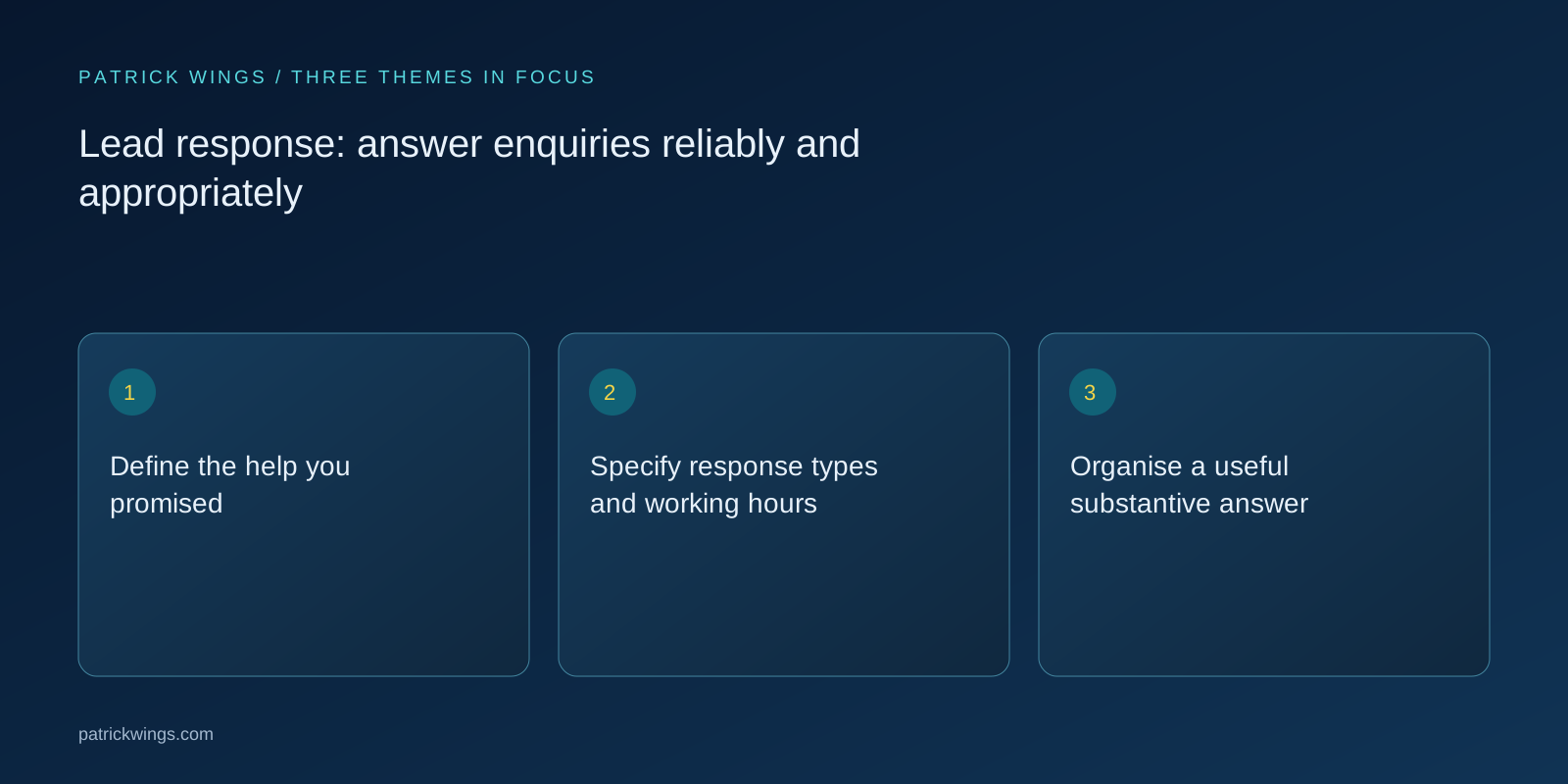
Organise a useful substantive answer
Agree response classes based on urgency and the offer’s promise. Provide visible queues, absence cover and escalation. The first answer should address the question, identify responsibility and suggest a realistic next step. During handoffs, check whether the buyer is being required to repeat information already provided.
Prepare templates for recurring needs but let the responsible person check the question and fit. Integration guidance should specify supported versions and known limits. Clarify uncertain requirements through a focused question. Avoid a lengthy mandatory questionnaire when existing documentation can already answer the particular request without further personal or commercial information.
Distinguish weekend timing in an example
An invented enquiry arrives at 6 p.m. on Friday. An acknowledgement is immediate, while a qualified colleague replies at 10 a.m. on Monday. Calendar time and business time produce different values. Both can be shown; the case should not be described as substantively answered when only the automatic receipt exists. Explore this further in the guide Sales capacity: match campaigns to actual follow-up capacity.
In the invented Friday case, the acknowledgement should name the next realistically staffed period. Monday’s response must then address the particular issue. The same arrangement might be inappropriate for an advertised urgent service channel. Assessment therefore depends on the service offered and availability promised, not a universal hour threshold detached from the original offer.

Respect intent rather than adding pressure
Persistent calls following a download can damage trust. Conversely, a polite but empty message leaves an urgent integration question unresolved. Investigate delivery failures and unsuitable contact channels too. A lack of reply does not establish that the prospect was unsuitable or that slow sales response caused the outcome.
When someone requested materials only, inspect the actual contact request before calling. Delivery failure, an automatic absence message and an unanswered clarification are different states. Record those reasons separately. Lack of reaction should not automatically trigger another contact step without somebody checking delivery and whether the proposed approach remains appropriate for the expressed intent.
Review resolved questions alongside speed
Review response time alongside resolved questions, confirmed next steps and buyer feedback. Inspect repeated transfers. If faster routing enables more suitable conversations, that matters; if only automatic acknowledgements increase, the actual service has not yet improved even though the apparent speed metric looks better.
Regularly inspect a small sample of enquiries marked answered. Could the recipient resolve the question or understand the next step offered? Collect repeated follow-up questions that a template apparently leaves unresolved. A quickly sent message becomes useful when the content, responsible person and expected subsequent process are clear to the recipient rather than merely present in an internal log. Explore this further in the guide Demo pages that set useful expectations before the conversation.
Align cover and response promises
Record owner, cover and permissible promises for each response class. Operations checks neglected enquiries while marketing aligns advertised response promises with real availability. Plan holidays and campaign peaks in advance so an explicitly promised callback is supported by the staffing and expertise required to deliver it.
Before launches, sales confirms specialist cover and marketing verifies advertised expectations. When capacity tightens, adjust the promise visibly rather than continuing to promote unavailable immediate help. During reviews, trace transferred cases through to a real answer. This prevents complex questions from disappearing between a fast initial response and an ambiguous later specialist handoff.
INTERACTIVE / FROM READING TO ACTION
Three checkpoints for your implementation
Choose a checkpoint and track your reading progress. Checks are neither saved nor sent and do not score your business.
CHECKPOINT 01
Organise a useful substantive answer
Agree response classes based on urgency and the offer’s promise.
Explore in the article ↗CHECKPOINT 02
Distinguish weekend timing in an example
An invented enquiry arrives at 6 p.m.
Explore in the article ↗CHECKPOINT 03
Respect intent rather than adding pressure
Persistent calls following a download can damage trust.
Explore in the article ↗Frequently asked questions
Does an automatic email count?
As acknowledgement, yes; as a substantive answer only if it actually resolves the task.
Calendar or business hours?
Both can be useful when clearly labelled. Separate elapsed calendar time from staffed working time, and distinguish automatic acknowledgement from a substantive answer.
Should every downloader be called?
No. Follow-up should reflect the offer and expressed intent.
How can I put “Define the help you promised” into practice?
Answer B2B enquiries reliably and in line with expressed intent. Speed matters, but an automated acknowledgement is not yet a substantive answer. Define the useful response for a demo request, a technical question and a content download rather than treating every submission as the same task.
What matters when working on “Specify response types and working hours”?
Separate arrival, automatic acknowledgement, first human handling and genuinely useful response. Record business hours and cover arrangements. Without these definitions, response times cannot fairly compare teams and may encourage colleagues to send empty messages quickly instead of resolving the buyer’s actual question.