
THE SHORT ANSWER
A visit from an AI assistant is an observed acquisition source, not a complete record of every AI mention. Useful analysis needs appropriate analytics dimensions, inspectable source rules and a dependable connection to later enquiries. Keep this measurement separate from visibility tests within AI answers: the two methods answer different questions about discovery and business relevance.
For the broader picture of technical foundations, useful content and visibility measurement, read the pillar guide SEO, GEO and AEO for SaaS: visibility that supports buying decisions.
Define measurement purpose and scope
Decide whether you are examining sessions, first-user acquisition or attributed key events. These scopes should not be treated as interchangeable visitor counts. Document the period, consent conditions and known collection failures. A person may visit several times through different sources before making an enquiry. State the specific question, such as which observed sessions from particular assistants reach a relevant product destination. Do not claim to capture every purchase decision influenced by AI. Copied links, later direct visits and other unattributed journeys may lack an identifiable technical source even where an assistant influenced the buyer’s earlier thinking.
Check current channel rules rather than old assumptions
Consult current documentation for the analytics tool and the dimensions actually used. Google Analytics now documents an AI Assistant default channel, distinguishing it from Google AI Overviews and AI Mode within Organic Search. Older reports or custom groupings may differ. Record the rules behind the particular analysis and inspect individual sources. Do not assume that every AI visit will always be classified as Referral. A platform classification change can affect a time series without a matching change in underlying behaviour. Mark such methodological breaks explicitly rather than presenting them as sudden commercial growth or loss. Explore this further in the guide Measuring GEO and AEO: what AI visibility tells you about your business.
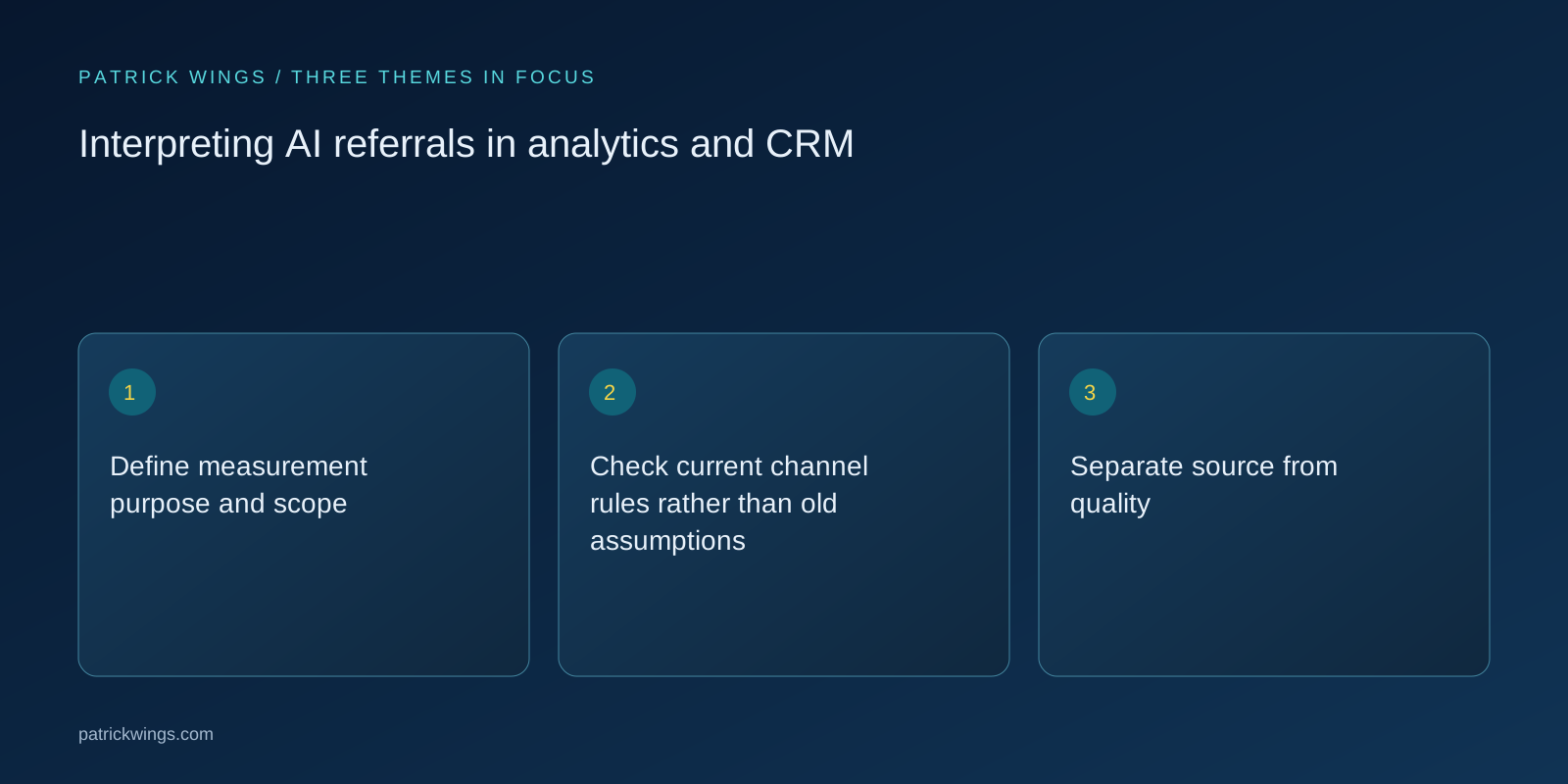
Separate source from quality
Inspect relevant landing pages and observed actions before declaring a source valuable. A short visit may have answered the question or been entirely mismatched; duration alone cannot distinguish those cases. Define meaningful events around the actual website task and test their collection. Avoid a conversion definition so broad that every page contact becomes a success. Compare appropriate page types over sufficiently mature periods. Small samples can shift substantially because of individual events. Report the observations and uncertainty rather than deriving a stable general superiority of AI visitors from a few apparently strong sessions or early enquiries.
Build an inspectable CRM connection
Carry permitted source information through the intended form and CRM handoffs, checking which fields may later be overwritten. Separate first observed source, current-session source and the prospect’s own explanation of discovery. An optional self-reported discovery question complements technical data without replacing it entirely. Do not assign contacts to a source through unsupported guesses. Check duplicates, open opportunities and the maturity of sales journeys. A later closed deal may follow multiple contacts and influences. CRM reporting should therefore explain the attribution rule used and the causal relationships that the rule cannot establish from observed records alone.

Example: interpreting a small visit group
A hypothetical consultancy observes assistant-origin visits to a specialist article. Some sessions continue to a service page, while an enquiry later arrives through another channel. The team documents the observed route and inspects permitted connections without automatically assigning the full revenue to the first AI contact. It also checks whether a channel-rule change affected reporting. This example illustrates useful questions for a small dataset. It contains no invented conversion rates and does not establish that users of a particular platform are generally more purchase-ready. Interpretation remains bounded by the information genuinely available in the measurement system.
Maintain a dependable source report
Present sources, data scope, relevant actions and attribution limits together. Connect an unusual finding to a concrete investigation, such as checking the clarity of a common landing page. Keep question-panel visibility separate: a citation without a click is not a website visit. After tracking or platform changes, verify that periods remain comparable. Where important data is unavailable, identify the gap rather than concealing it through unlabelled modelling assumptions. A useful report supports an appropriate decision about content or user journeys. It does not need to imply that every commercial contact can be assigned unambiguously to one discovery channel. Explore this further in the guide Building SEO and AI reports around decisions.
INTERACTIVE / FROM READING TO ACTION
Three checkpoints for your implementation
Choose a checkpoint and track your reading progress. Checks are neither saved nor sent and do not score your business.
CHECKPOINT 01
Separate source from quality
Inspect relevant landing pages and observed actions before declaring a source valuable.
Explore in the article ↗CHECKPOINT 02
Build an inspectable CRM connection
Carry permitted source information through the intended form and CRM handoffs, checking which fields may later be overwritten.
Explore in the article ↗CHECKPOINT 03
Example: interpreting a small visit group
A hypothetical consultancy observes assistant-origin visits to a specialist article.
Explore in the article ↗Frequently asked questions
Are AI mentions and visits the same?
No. A mention may produce no click; analytics measures observed visits under its collection conditions.
Are all AI visits classified as Referral?
No. Channel rules vary and change. Check current documentation and the actual source data.
Does attribution prove revenue influence?
No. An attribution rule describes allocation rather than automatically establishing causality.
How can I put “Define measurement purpose and scope” into practice?
Decide whether you are examining sessions, first-user acquisition or attributed key events. These scopes should not be treated as interchangeable visitor counts. Document the period, consent conditions and known collection failures.
What matters when working on “Check current channel rules rather than old assumptions”?
Consult current documentation for the analytics tool and the dimensions actually used. Google Analytics now documents an AI Assistant default channel, distinguishing it from Google AI Overviews and AI Mode within Organic Search. Older reports or custom groupings may differ.