
THE SHORT ANSWER
Someone searching for a software alternative often already has specific expectations or experience. A useful comparison page takes that starting point seriously. It explains differences through genuine selection criteria and shows which approach fits which situation. Your own position can be clear. Credibility comes from substantiated details and an honest explanation of limitations.
For the broader picture of technical foundations, useful content and visibility measurement, read the pillar guide SEO, GEO and AEO for SaaS: visibility that supports buying decisions.
Distinguish comparisons from searches for alternatives
A direct comparison between two products usually assumes the buyer already knows both. An alternatives page may instead explain why a different operating model, target audience or feature scope could be appropriate. Establish the question behind the search first. Is the concern pricing, integration, usability or an organisational constraint? A generic list of supposedly superior tools offers little value when it ignores the reasons for considering a change. Record that underlying question in the editorial brief before deciding on the structure.
Choose criteria from real purchase decisions
Collect criteria from opportunities you have won and lost. These may include implementation effort, permissions, integration, data export, support and contractual prerequisites. Features do not carry the same weight for every buyer. Explain which use case makes a criterion important. A fictional project platform for agencies should not necessarily be evaluated like software for complex industrial portfolios. A useful comparison exposes those differences instead of automatically declaring a winner through arbitrary checklists. Make the reasoning visible enough for readers to apply their own priorities.
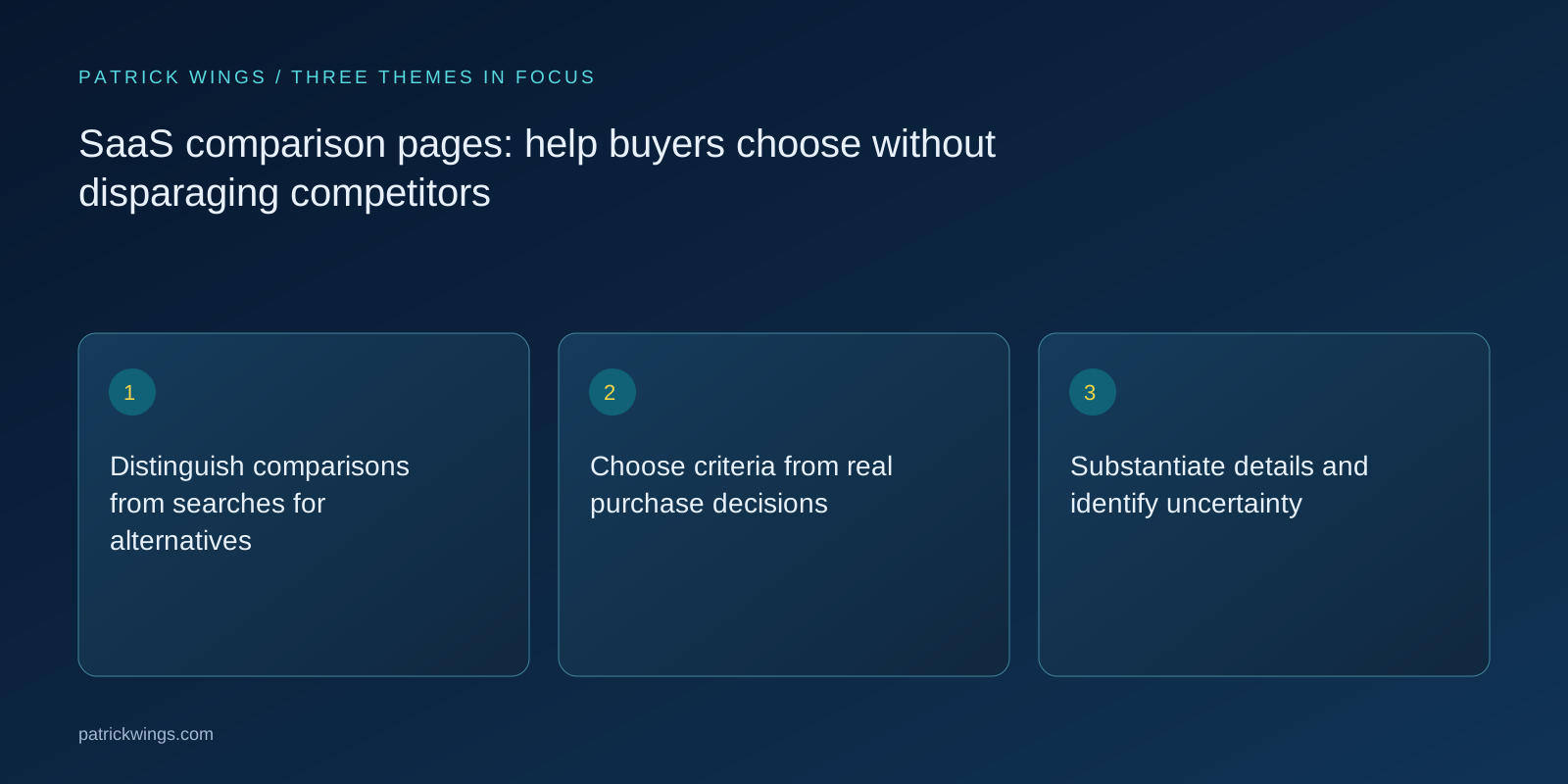
Substantiate details and identify uncertainty
Use current vendor documentation for verifiable product characteristics and state when the information was checked. If a capability depends on a plan, contract or additional integration, make that dependency clear. Missing public information does not automatically mean a competitor lacks a feature. Use cautious wording or verify directly. Separate first-hand experience from documented facts. Avoid customer quotations without permission and do not interpret another vendor’s marketing claims more broadly than their source supports. A comparison should remain defensible when the other provider reads it. Explore this further in the guide Prepare content for AI answers: clarity, evidence and honest limits.
Explain the consequence of a difference
A table of checkmarks is easy to produce but does not resolve a buying decision. Explain what each meaningful difference implies in day-to-day work. An open interface may be useful but requires technical resources. A preconfigured integration may start faster while supporting less individual logic. Those explanations make the comparison valuable. Describe situations where your own product is a poor fit and when a competitor could be more suitable. This helps both parties avoid sales conversations that were unlikely to produce a successful engagement. Explore this further in the guide SaaS keyword strategy: turn searches into useful pages.

Support a possible migration realistically
Prospects often need to understand data migration, training and parallel operation. Explain which details are necessary before you can give a responsible estimate. Avoid claiming that every transition is effortless. A sensible next step might be a migration checklist or a technical discussion. Help readers organise outstanding requirements. The comparison should improve the quality of the next conversation, not merely produce interest. Making dependencies visible before an enquiry allows buyers to assess feasibility and brings more useful information into the evaluation process.
Assign responsibility for updates
Competitor pages can become outdated faster than foundational guides. Assign an owner and define review triggers such as pricing changes, new plans or modified interfaces. Check internal links and statements on neighbouring pages too. An accurate table is undermined if the introduction still repeats an obsolete limitation. Evaluate relevant searches and qualified subsequent actions. Success does not mean persuading every visitor to leave a competitor. It means helping suitable buyers make an informed decision and giving unsuitable buyers enough clarity to choose a better fit.
INTERACTIVE / FROM READING TO ACTION
Three checkpoints for your implementation
Choose a checkpoint and track your reading progress. Checks are neither saved nor sent and do not score your business.
CHECKPOINT 01
Substantiate details and identify uncertainty
Use current vendor documentation for verifiable product characteristics and state when the information was checked.
Explore in the article ↗CHECKPOINT 02
Explain the consequence of a difference
A table of checkmarks is easy to produce but does not resolve a buying decision.
Explore in the article ↗CHECKPOINT 03
Support a possible migration realistically
Prospects often need to understand data migration, training and parallel operation.
Explore in the article ↗Frequently asked questions
Can we argue clearly for our own product?
Yes. Make your perspective transparent and substantiate factual claims. An honest comparison can highlight your strengths.
What if competitor information is missing?
Identify the information gap or verify directly. Missing documentation is not proof that a capability does not exist.
When should comparison pages be updated?
After relevant product, plan or pricing changes and through a regular editorial review. Make the check date visible.
How can I put “Distinguish comparisons from searches for alternatives” into practice?
A direct comparison between two products usually assumes the buyer already knows both. An alternatives page may instead explain why a different operating model, target audience or feature scope could be appropriate. Establish the question behind the search first.
What matters when working on “Choose criteria from real purchase decisions”?
Collect criteria from opportunities you have won and lost. These may include implementation effort, permissions, integration, data export, support and contractual prerequisites. Features do not carry the same weight for every buyer.